By Melvin L. Wilcox
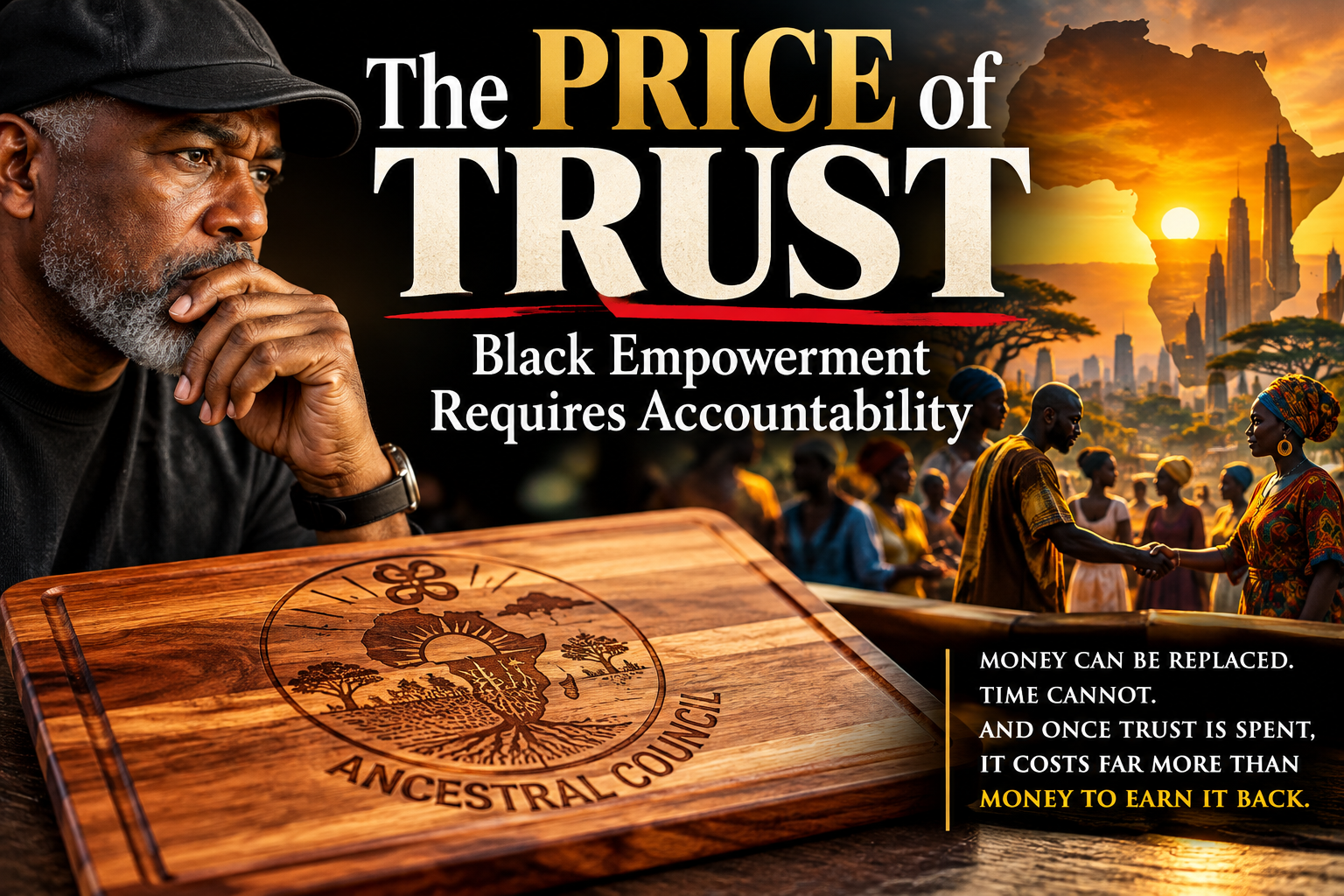
I have always believed that money is replaceable. Time is not.
You can lose money and earn it again. You can make a bad purchase and recover financially. But the hours you spend—the conversations, the effort, the energy—you will never get those back.
Recently, I was reminded that there is something else that is difficult to replace once it has been lost.
Trust.
I came across a talented Black craftsperson creating beautiful handmade work. As a creative person myself, I understand what it means to make something with your hands, your imagination, and your heart.
So I wanted to support that creativity.
Not because I needed the cheapest product I could find.
Not because I couldn’t have bought something similar somewhere else.
I wanted to support us.
That distinction matters.
Supporting Our Own
We often talk about supporting Black businesses.
We encourage one another to buy Black, invest Black, build Black, create Black, and circulate our dollars within our communities.
I believe in that.
But there is another side of Black economic empowerment that we don’t discuss nearly enough.
Supporting one another requires us to be worthy of one another’s support.
A customer has responsibilities. Pay people fairly. Respect their craft. Don’t expect discounts simply because you share a community. Don’t diminish someone’s labor by constantly asking them to lower their price.
But the business owner has responsibilities too.
Be honest.
Honor your word.
Communicate clearly.
Charge people fairly.
And above all, don’t mistake someone’s desire to support you for an opportunity to take advantage of them.
Because when that happens, something far more valuable than money changes hands.
Trust is lost.
The Damage Is Bigger Than One Transaction
This is where the issue becomes larger than one customer and one business.
Every successful interaction between two people builds confidence.
Maybe we really can build together.
And every dishonest interaction plants the opposite thought.
Maybe I shouldn’t trust the next person.
That’s the tragedy.
The next Black entrepreneur may be completely honest.
The next artist may deserve every dollar they’re asking.
The next young person trying to turn a talent into a business may desperately need someone to believe in them.
But now they encounter a customer whose trust has already been wounded by someone else.
That is how distrust spreads.
And distrust has been one of the most expensive inheritances of the African diaspora.
What Was Taken From Us
When we speak about the history of African people throughout the diaspora, we understandably talk about what was stolen.
Land.
Freedom.
Names.
Languages.
Families.
Labor.
Wealth.
But centuries of slavery, colonialism, segregation, displacement and exploitation damaged something else:
our ability to trust one another.
People were deliberately divided.
House against field.
Light against dark.
African against African American.
Caribbean against African.
Poor against poor.
Community against community.
Division was not merely a consequence of oppression. Often, it was one of its tools.
Which means rebuilding trust among ourselves is not some sentimental exercise.
It is an act of reconstruction.
Unity Requires More Than a Slogan
This is one of the ideas at the heart of The Return Chronicles.
One Race. One People. One Destiny.
Those words sound beautiful.
But if they are going to mean anything, they must demand something from us.
Unity cannot simply mean standing together when someone outside our community threatens us.
Unity must also mean how we treat one another when nobody else is watching.
If I call you my brother, your trust cannot become my opportunity.
If I call you my sister, your generosity cannot become my weakness.
If we talk about building Black economic power while cheating one another in the marketplace, then we are building on sand.
If we speak of unity but refuse accountability, then unity becomes performance.
And if we dream about rebuilding what history scattered across the world, then we must understand:
Coming together is only the beginning.
We must learn how to stay together.
Accountability Is Not Betrayal
Sometimes we hesitate to criticize wrongdoing within our own community because we fear that doing so somehow undermines Black solidarity.
I believe the opposite.
Accountability is an expression of respect.
When I expect honesty from you, I am saying that I believe you are capable of honesty.
When I expect excellence from you, I am saying that I believe you are capable of excellence.
When I hold myself to those same standards, I am saying that our community deserves my best as well.
Black empowerment should never require us to lower our standards for one another.
It should require us to raise them.
The Real Currency
So I came away from a disappointing experience thinking about something much larger than what I had purchased.
Money?
Money can be replaced.
But time cannot.
And trust?
Once trust is spent, it costs far more than money to earn it back.
Perhaps that is one of the responsibilities facing all of us who speak about unity, empowerment and building something for the generations that follow.
We must become trustworthy enough to build together.
Accountable enough to correct one another.
Generous enough to support one another.
And honorable enough not to exploit that generosity when it is offered.
Because the future we keep saying we want will not be built merely by people who look alike.
It will be built by people who can trust one another.
And perhaps that is the greater meaning of the Return.
It isn’t simply about returning to a continent.
It isn’t even simply about returning to our history.
The Return asks more of us than coming home.
It asks us to become worthy of one another.
Leave a Reply